
Silver Coins vs Silver Bars: Which Is Better for Beginners in 2026?
If you are new to physical silver, one of the first questions you will face is simple: should you buy silver coins or silver bars?
Both can be good choices. Both give you direct ownership of real silver. But they are not the same when it comes to premiums, storage, resale, flexibility, and beginner-friendliness.
This guide breaks down the difference between silver coins and silver bars in plain English so you can choose the option that fits your budget, goals, and comfort level.
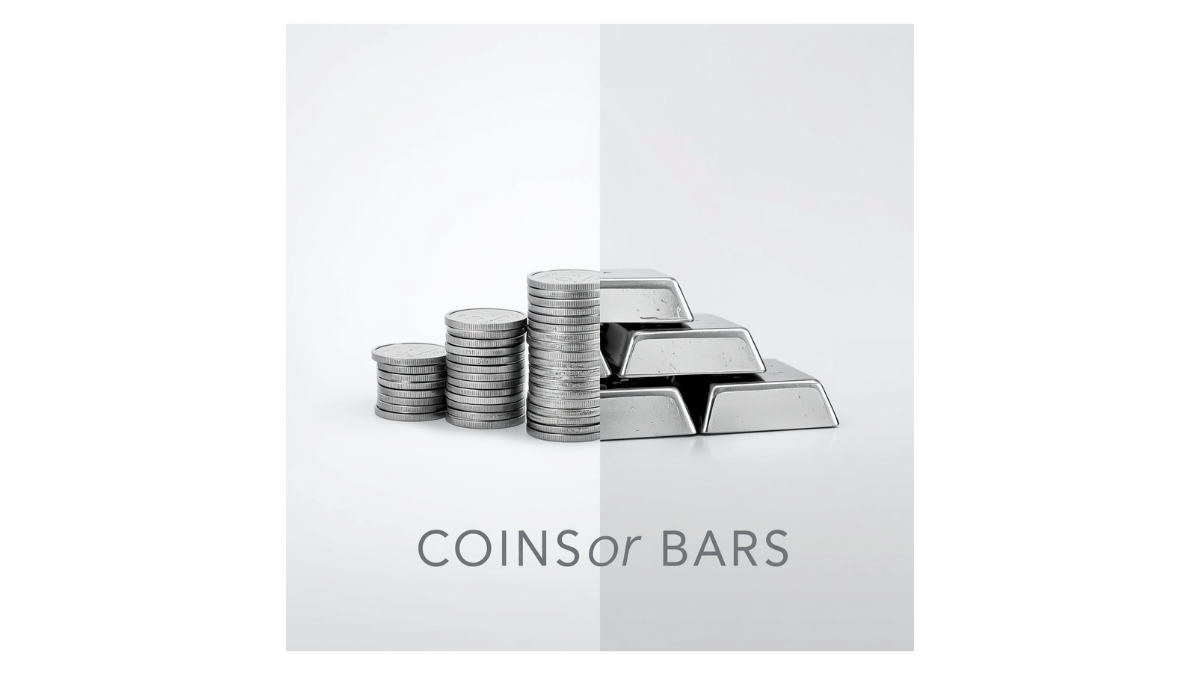
Quick answer: Silver coins are usually better for beginners who want flexibility, easy resale, and recognizable pieces. Silver bars are usually better for buyers who want more silver for the money and lower premiums per ounce.
Important: This article is for educational purposes only and is not financial advice. Precious metals can rise or fall in value, and every buyer should compare prices, premiums, taxes, shipping, storage, and resale options before making a purchase.
What Is the Main Difference Between Silver Coins and Silver Bars?
The main difference is how the silver is packaged, priced, recognized, and resold.
Silver coins are usually government-minted bullion coins. Popular examples include American Silver Eagles, Canadian Silver Maple Leafs, and British Silver Britannias. These coins often carry a legal tender face value, but their real value usually comes from the silver content and market demand.
Silver bars are usually privately minted or refinery-produced pieces of silver. They can come in many sizes, from 1 oz bars to 10 oz bars, kilo bars, 100 oz bars, and much larger institutional bars. Bars are often chosen by investors who want to stack more silver at a lower cost per ounce.
Best for Flexibility
Coins are often easier for beginners to recognize, sell, gift, trade, and store in small amounts. They can cost more per ounce because they usually carry higher premiums.
Best for Lower Cost Per Ounce
Bars are often preferred by buyers who want to build silver weight efficiently. Larger bars usually have lower premiums per ounce, but they may be less flexible when selling small amounts.
Resale tip: Coins and bars can both be sold, but they may not sell the same way. Before choosing what to buy, compare your resale options in our beginner guide to where to sell silver in 2026.
Silver Coins vs Silver Bars: Beginner Comparison Table
| Feature | Silver Coins | Silver Bars |
|---|---|---|
| Best for | Beginners, small buyers, flexible resale, recognizable silver | Stackers, bulk buyers, lower premium buyers |
| Typical sizes | Usually 1 oz bullion coins | 1 oz, 5 oz, 10 oz, kilo, 100 oz, and larger |
| Premiums | Often higher | Often lower, especially on larger bars |
| Liquidity | Usually very strong for popular government coins | Good, especially for recognized brands and common sizes |
| Storage | Easy to divide and organize | Space-efficient for larger holdings |
| Resale flexibility | High because you can sell one coin at a time | Lower if you only own large bars |
| Beginner friendliness | Very beginner-friendly | Beginner-friendly if buying common sizes like 5 oz or 10 oz |
| Main downside | Higher cost above spot price | Less flexible if you need to sell small amounts |
Beginner safety tip: Whether you choose coins, bars, or rounds, authenticity matters. Before buying from private sellers or unknown sources, read our simple guide on how to tell if silver is real.
What Are Silver Premiums?
When you buy physical silver, you usually do not pay only the silver spot price. You also pay a premium.
A premium is the extra amount above the current silver spot price. This extra cost can include minting, refining, dealer margin, shipping, demand, supply shortages, brand recognition, and product type.
Simple Example
Imagine silver spot price is $30 per ounce.
A 1 oz silver coin may sell for $35 because it has a $5 premium. A 10 oz silver bar may sell for $320, which works out to $32 per ounce. In this example, the bar gives you more silver for the money, while the coin gives you more flexibility.
This is why beginners should never look only at the sticker price. Always compare the price per ounce and the premium over spot.
Why Beginners Often Choose Silver Coins First
Silver coins are popular with beginners because they feel simple, recognizable, and easy to understand. When someone buys a well-known bullion coin, they are not only buying silver. They are buying a widely recognized product that many dealers, collectors, and private buyers already understand.
Easy to Recognize
Popular silver coins are familiar in the bullion market. This can make them easier for new buyers to verify, compare, and resell later.
Easy to Sell in Small Amounts
If you own 20 individual coins, you can sell one, five, or ten at a time. That flexibility matters if you do not want to liquidate your entire silver stack.
Simple for New Buyers
Coins are easier to understand than large bars, collectible rounds, or complicated precious metals products. That makes them a comfortable first step.
Pros and Cons of Silver Coins
Pros of Silver Coins
- Often easier to resell than obscure silver products.
- Great for beginners because common coins are widely recognized.
- Easy to divide into small amounts.
- Good for gifting, emergency flexibility, and gradual stacking.
- Popular government-minted coins may hold stronger resale demand.
Cons of Silver Coins
- Usually carry higher premiums than bars.
- May cost more per ounce when silver demand is high.
- Some coins may have collectible premiums that beginners do not fully understand.
- Buying only coins can make it slower to build total silver weight.
Why Some Beginners Choose Silver Bars Instead
Silver bars can also be a smart beginner choice, especially for someone whose main goal is to build silver weight at a lower cost per ounce.
For many buyers, the appeal is simple: bars often give you more silver for your money. A 10 oz bar may have a lower premium per ounce than ten individual 1 oz coins. That difference can matter over time.
Lower Premiums
Bars are often less expensive per ounce than coins, especially as the bar size increases.
Efficient Stacking
Bars are easy to stack, label, count, and store. A few 10 oz bars can build your silver position quickly.
Simple Weight Focus
If your main goal is ounces, not collectibility, bars can keep the buying decision clean and practical.
Pros and Cons of Silver Bars
Pros of Silver Bars
- Often lower premiums per ounce than coins.
- Good for building silver weight efficiently.
- Easy to store in larger quantities.
- Available in many sizes, including 1 oz, 5 oz, 10 oz, kilo, and 100 oz.
- Simple choice for buyers focused mainly on bullion value.
Cons of Silver Bars
- Large bars are less flexible when you only want to sell a small amount.
- Some private-mint bars may be less recognizable than famous bullion coins.
- Very large bars may require more careful verification when buying or selling.
- Shipping, storage, and insurance may become more important as your stack grows.
Beginner Tip: Do Not Start Too Large
If you are new to silver, avoid making your very first purchase a large 100 oz bar. It may look efficient, but it gives you less flexibility. Many beginners are better off starting with 1 oz coins, 5 oz bars, or 10 oz bars while they learn how premiums, dealers, storage, and resale work.
Which Is Easier to Sell: Silver Coins or Silver Bars?
In general, popular silver coins are often easier to sell in small amounts because they are widely recognized and commonly traded. This is one reason coins are so appealing to beginners.
That does not mean bars are hard to sell. Recognized bars from reputable mints and refiners can also be liquid. The difference is flexibility.
Resale Example
If you own twenty 1 oz silver coins, you can sell five coins and keep the rest.
If you own one 20 oz bar, you cannot sell only five ounces from that bar. You either sell the whole bar or keep it.
This is why many beginners like to own at least some smaller pieces, even if they later move into larger bars.
Which Has Lower Premiums?
Silver bars usually have lower premiums than silver coins, especially larger bars. This is because bars are often simpler to produce and package, and larger units spread production costs over more ounces.
Silver coins often carry higher premiums because they may have government minting costs, strong collector demand, recognizable designs, and extra demand during uncertain markets.
For pure ounce-building, bars usually win. For flexibility and recognition, coins usually win.
Which Is Better for Storage?
Both silver coins and silver bars need safe storage. The right choice depends on how much silver you plan to own.
Silver coins are easy to divide into tubes, boxes, capsules, or small storage containers. They are excellent for organizing a beginner stack.
Silver bars are more space-efficient as your stack grows. Ten 10 oz bars can be easier to count and store than one hundred individual coins. However, larger bars may also require stronger storage planning, especially if your holdings become valuable.
Coins Are Better When…
- You want small, flexible pieces.
- You may sell a few ounces at a time.
- You prefer recognizable government bullion.
- You are still learning the silver market.
Bars Are Better When…
- You want more ounces for the money.
- You are buying larger amounts.
- You want simple storage and stacking.
- You are focused on bullion weight, not collectibility.
For a deeper beginner-friendly storage guide, read: How to Store Silver Safely.
Best Silver Coins for Beginners
Beginners should usually focus on common, recognizable bullion coins rather than rare, graded, or collectible coins. The goal is to understand physical silver first before paying extra for numismatic value.
American Silver Eagle
One of the most recognized silver bullion coins in the world. It is popular with U.S. buyers and often carries a higher premium than many other silver coins.
Canadian Silver Maple Leaf
A popular government-minted bullion coin known for high recognition and strong demand among silver buyers.
British Silver Britannia
A widely recognized bullion coin from The Royal Mint. It can be a strong option for buyers who want a trusted government-minted silver coin.
If you are comparing where to buy, you may also want to read: Best Silver Dealers 2026.
Best Silver Bars for Beginners
For beginners, the most practical silver bar sizes are often 5 oz and 10 oz bars. They are large enough to reduce premiums compared with many coins, but not so large that resale becomes awkward.
1 oz Silver Bars
Easy to understand and affordable, but premiums may be closer to coins than larger bars. Good for learning, not always the cheapest per ounce.
5 oz Silver Bars
A nice middle ground for beginners who want more silver per purchase without committing to a large bar.
10 oz Silver Bars
Often one of the best beginner bar sizes because it balances lower premiums, easy storage, and reasonable resale flexibility.
Should Beginners Buy Silver Rounds?
Silver rounds are another option. They look like coins, but they are usually privately minted and do not carry legal tender status.
Rounds can sometimes offer lower premiums than government coins while still giving you 1 oz silver pieces. However, beginners should stick with recognizable private mints and avoid unusual designs they do not understand.
For a beginner, rounds can be a middle ground between coins and bars. They are flexible like coins but may cost less than popular government bullion coins.
Silver Coins vs Silver Bars: Which Is Better During High Demand?
When silver demand rises quickly, premiums can move fast. Coins may become more expensive because many buyers want recognizable 1 oz pieces. Bars may also rise in premium, but larger bars can still sometimes offer a better price per ounce.
This is why it is smart to compare several formats before buying. Do not automatically assume one product is always cheapest. Check coins, rounds, 5 oz bars, 10 oz bars, and kilo bars before deciding.
Beginner rule: The best silver product is not always the one with the lowest price. It is the one that gives you the right mix of price, trust, storage, and resale flexibility.
Beginner Buying Strategy: The Balanced Stack
Many beginners do not need to choose only coins or only bars. A balanced stack can give you the strengths of both.
| Beginner Goal | Suggested Silver Mix | Why It Works |
|---|---|---|
| Maximum flexibility | Mostly 1 oz coins and rounds | Easy to sell, trade, gift, or add slowly over time. |
| Lower average premium | Mostly 10 oz bars with some coins | Bars help reduce cost per ounce while coins keep resale flexible. |
| First 50 oz stack | 20 oz in coins, 30 oz in bars | A practical mix for beginners who want both recognition and efficiency. |
| Long-term stacking | Coins for flexibility, bars for weight | This approach can grow with you as your silver position gets larger. |
Example: A Simple Beginner Silver Plan
Michelle’s Beginner Stack Example
Let’s say a beginner wants to slowly build a 50 oz silver stack.
A simple plan could look like this:
- 10 American Silver Eagles or other popular 1 oz coins
- 10 lower-premium 1 oz silver rounds
- Three 10 oz silver bars
This gives the buyer 20 small pieces for flexibility and 30 ounces in bars for lower average premiums. It is simple, practical, and easier to manage than jumping straight into very large bars.
Common Beginner Mistakes to Avoid
Only Looking at Spot Price
Spot price matters, but your real cost is the final delivered price after premiums, shipping, taxes, and payment fees.
Buying Collectibles Too Early
Rare coins, graded coins, and limited editions can be interesting, but they are not always the best starting point for beginners focused on silver weight.
Ignoring Resale
Before buying, ask yourself how easy it will be to sell that product later. Recognizable pieces are usually safer for beginners.
Buying From Unknown Sellers
Cheap silver is not always safe silver. Stick with reputable dealers, especially when you are still learning.
Going Too Big Too Soon
Large bars may look efficient, but beginners often benefit from smaller pieces while they learn storage and resale basics.
No Storage Plan
Silver is physical. You need a safe place to keep it before your stack grows, not after.
Where Should Beginners Buy Silver?
Beginners should buy from established silver dealers with clear pricing, transparent premiums, secure checkout, reasonable shipping, and a good reputation.
Do not rush into the first offer you see. Compare the total delivered price across more than one dealer. A product that looks cheaper may become more expensive after shipping or payment fees.
Helpful next reads:
- Best Silver Dealers 2026
- APMEX vs JM Bullion: Silver Dealer Comparison 2026
- Silver IRA vs Physical Silver
- How to Store Silver Safely
Are Silver Coins or Bars Better for a Silver IRA?
If you are buying silver for a self-directed precious metals IRA, the rules are different from buying silver for personal storage. IRA silver generally needs to meet specific purity and custodian requirements, and not every coin, bar, or round will qualify.
For most beginners, it is helpful to separate two questions:
Personal Physical Silver
You buy silver coins, bars, or rounds and store them yourself or with a private vault. You control the physical metal directly.
Silver IRA
You buy eligible silver through a qualified IRA structure, and the metal is held by an approved custodian or depository.
For a deeper comparison, read: Silver IRA vs Physical Silver.
Final Verdict: Silver Coins or Silver Bars?
For most beginners in 2026, the best starting point is not an extreme choice. It is a balanced approach.
Choose silver coins if you want flexibility, easy resale, recognizable pieces, and a simple beginner-friendly experience.
Choose silver bars if your main goal is to build more ounces at a lower average premium.
Best beginner answer: Start with recognizable 1 oz coins or rounds, then add 5 oz or 10 oz bars as you become more confident. This gives you flexibility now and better cost efficiency as your stack grows.
Silver Coins vs Silver Bars FAQs
Are silver coins better than silver bars?
Silver coins are often better for beginners who want flexibility, recognition, and easier resale in small amounts. Silver bars may be better for buyers who want lower premiums and more silver weight for the money.
Are silver bars harder to sell than coins?
Recognized silver bars are usually not hard to sell, but large bars can be less flexible. Coins are easier to sell in small amounts because each coin is usually one separate ounce.
What size silver bar is best for beginners?
Many beginners prefer 5 oz or 10 oz silver bars because they offer a good balance between lower premiums and resale flexibility. Very large bars may be better suited to experienced buyers.
Do silver coins have higher premiums?
Silver coins often have higher premiums than bars, especially popular government-minted bullion coins. However, they may also be easier to recognize and resell.
Should I buy silver coins, bars, or rounds first?
A beginner-friendly approach is to start with recognizable 1 oz coins or rounds, then add 5 oz or 10 oz bars once you understand pricing, premiums, storage, and resale.
Is it better to buy silver online or locally?
Both can work. Online dealers may offer more selection and easier comparison shopping, while local coin shops may allow in-person inspection and immediate pickup. Always compare the final price, including premiums, taxes, shipping, and payment fees.
What is the safest silver for beginners?
The safest beginner choices are usually recognizable bullion products from reputable dealers, such as popular government-minted coins or well-known private-mint bars and rounds.
Next Steps
If you are still comparing your options, the next best step is to look at trusted silver dealers and learn how storage works before buying too much too quickly.