Junk Silver vs Bullion: Which Is Better for Beginners in 2026?
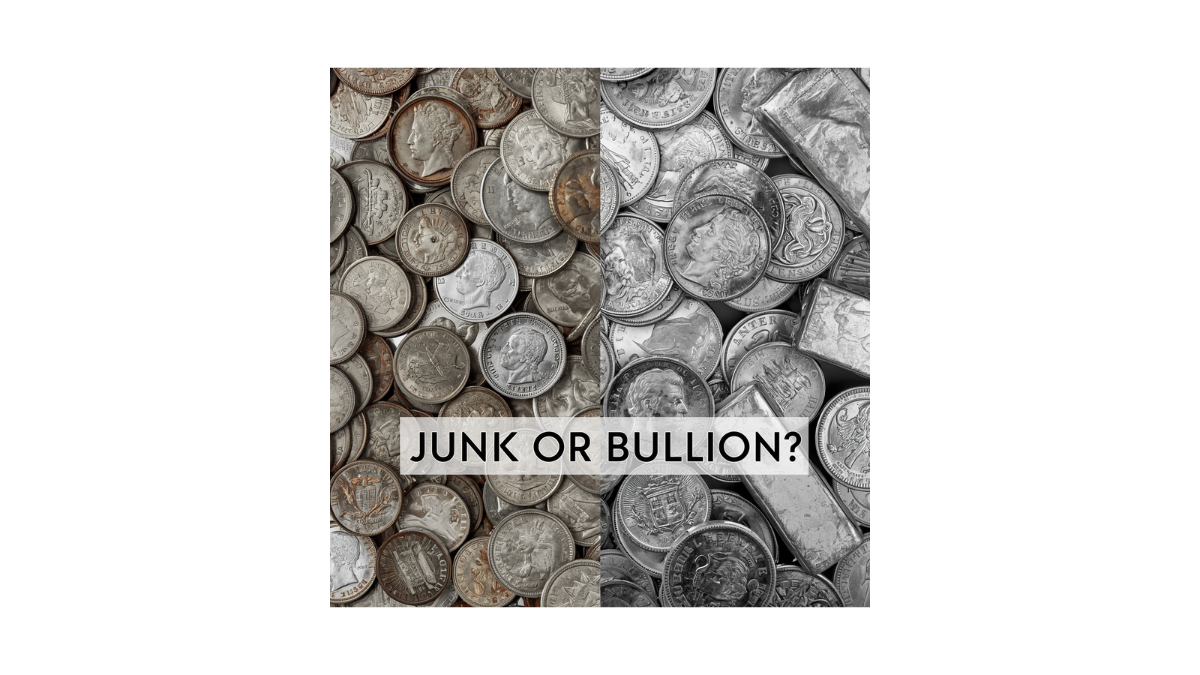
If you are learning how to buy physical silver, you will eventually come across the term junk silver. At first, it sounds like something worthless. But in the silver world, junk silver can actually refer to older circulated coins that contain real silver.
That creates a common beginner question: should you buy junk silver or modern silver bullion?
This guide explains the difference between junk silver and bullion in plain English, including silver content, premiums, resale value, storage, recognition, and which option may make more sense for beginners in 2026.
Quick answer: Modern silver bullion is usually easier for beginners because it is simple to understand, clearly marked, and widely sold by major dealers. Junk silver can be useful for buyers who understand coin types, silver content, and resale math, but it may feel more confusing for first-time silver buyers.
Important: This article is for educational purposes only and is not financial advice. Silver prices, premiums, dealer pricing, tax rules, product availability, and resale demand can change. Always compare total delivered cost, silver content, authenticity, storage needs, and resale options before buying.
What Is Junk Silver?
Junk silver usually refers to older circulated coins that contain silver but do not carry much collectible value beyond their metal content. The word “junk” does not mean the coins are fake or worthless. It usually means they are valued mainly for their silver content rather than rarity or condition.
In the United States, many people use the term junk silver for older 90% silver coins, often called constitutional silver. These may include certain dimes, quarters, half dollars, and dollars from earlier eras.
Junk Silver
Older circulated silver coins valued mostly for metal content, not collector rarity.
Constitutional Silver
A more respectful term often used for older U.S. silver coins that circulated as money.
Not Actually Junk
The coins may be worn or common, but they can still contain real silver and have bullion value.
What Is Silver Bullion?
Silver bullion usually refers to silver products bought primarily for their metal value. Bullion can come in several forms, including silver coins, rounds, and bars.
Modern bullion is often easier for beginners to understand because products are usually marked with weight and purity. For example, a 1 oz silver round or 10 oz silver bar will often clearly state its silver content.
Silver Coins
Government-minted bullion coins such as American Silver Eagles, Canadian Silver Maple Leafs, or British Silver Britannias.
Silver Rounds
Privately minted round bullion pieces that look like coins but usually do not have legal tender status.
Silver Bars
Rectangular bullion products available in sizes such as 1 oz, 5 oz, 10 oz, kilo, and 100 oz.
Junk Silver vs Bullion: Beginner Comparison Table
| Feature | Junk Silver | Modern Silver Bullion |
|---|---|---|
| Main form | Older circulated silver coins | Coins, rounds, and bars |
| Typical value driver | Silver content and market demand | Silver content, mint reputation, and product type |
| Beginner friendliness | Moderate, because silver content and coin types must be understood | High, because weight and purity are usually clearly marked |
| Premiums | Can vary depending on demand, availability, and coin type | Varies by coins, rounds, bars, and market conditions |
| Resale | Good if buyers understand the coins and silver content | Often easier for recognized bullion products |
| Storage | Easy to divide, but can be bulky in small denominations | Bars are efficient; coins and rounds are flexible |
| Best for | Buyers comfortable with coin math and older silver coins | Beginners who want simple, clearly marked silver products |
| Main downside | Can confuse beginners who do not understand silver content | Some products carry higher premiums above spot price |
Why Is It Called Junk Silver?
The name sounds harsh, but it is mostly a market nickname. Junk silver coins are usually not rare collector coins. They may be worn, circulated, scratched, or common. Because of that, buyers often value them mainly for the silver they contain.
That does not mean junk silver is bad. In fact, many silver stackers like it because it comes in small, familiar denominations and has a long history as real circulating money.
Beginner translation: Junk silver usually means “common old silver coins valued mostly for silver content,” not “worthless coins.”
Pros and Cons of Junk Silver
Pros of Junk Silver
- Often comes in small, flexible denominations.
- Recognizable to many coin and silver buyers.
- Can be useful for fractional silver exposure.
- Has history and familiarity as circulated money.
- May appeal to stackers who like older coins.
Cons of Junk Silver
- Silver content can be confusing for beginners.
- Coins may be worn or mixed in condition.
- Premiums can rise when demand is strong.
- Requires more knowledge of coin types and dates.
- May be bulkier to store compared with bars.
Pros and Cons of Modern Silver Bullion
Pros of Bullion
- Usually easier for beginners to understand.
- Weight and purity are often clearly marked.
- Available as coins, rounds, and bars.
- Easy to compare across reputable dealers.
- Can be more efficient for building silver weight.
Cons of Bullion
- Popular government coins may carry higher premiums.
- Large bars can be less flexible for small resale needs.
- Private-mint products require attention to reputation.
- Storage and insurance still matter as your stack grows.
Which Is Easier for Beginners?
Modern silver bullion is usually easier for beginners because it is straightforward. A 1 oz silver coin, round, or bar is usually easier to understand than a bag of mixed older coins with different dates, denominations, and silver content.
That is not a criticism of junk silver. It simply means junk silver requires a little more learning. You need to know what coins you are buying, what silver percentage they contain, how much actual silver weight is included, and whether the price makes sense.
Modern Bullion
Better for beginners who want clear weight, clear purity, simple comparison, and less coin-specific math.
Junk Silver
Better for buyers who are comfortable learning silver coin types, melt values, and denomination-based silver content.
Is Junk Silver Cheaper Than Bullion?
Sometimes junk silver can be attractive compared with modern bullion, but it is not automatically cheaper. Premiums change with supply, demand, dealer inventory, and buyer interest.
During periods when many people want fractional silver, junk silver premiums can rise. During calmer markets, it may be more affordable. This is why buyers should compare the total cost based on actual silver content, not just the face value of the coins.
Simple Example
A bag of older silver coins may have a face value like $10, but the real value depends on how much silver those coins contain and the current silver price.
A modern 10 oz silver bar is simpler to calculate because the bar usually states the silver weight directly. Beginners often find that easier when comparing prices.
Which Is Easier to Sell?
Both junk silver and modern bullion can be sold, but modern bullion may be simpler for beginners because the weight and purity are often clearly marked.
Junk silver can also be liquid, especially among coin shops, silver buyers, and stackers who understand constitutional silver. The challenge is that beginners need to understand what they own so they can recognize a fair resale offer.
Beginner Rule: Know the Silver Content Before You Buy
With modern bullion, the weight and purity are usually printed directly on the product. With junk silver, you need to understand the coin type, date, denomination, silver percentage, and actual silver weight. That extra math matters.
Junk Silver vs Bullion vs Silver Rounds
It also helps to compare junk silver with silver rounds. Silver rounds are modern private-mint bullion pieces. They are usually simpler than junk silver because they often state the weight and purity clearly, but they may be less recognized than major government coins.
| Silver Type | Best For | Main Strength | Main Tradeoff |
|---|---|---|---|
| Junk Silver | Buyers who understand older silver coins | Small denominations and historical familiarity | Requires silver-content knowledge |
| Silver Coins | Beginners who want recognition | Government minting and resale confidence | Often higher premiums |
| Silver Rounds | Buyers who want lower premiums | Affordable 1 oz stacking | Private-mint recognition varies |
| Silver Bars | Buyers building larger silver weight | Efficient stacking and lower cost per ounce in larger sizes | Large bars are less flexible for small sales |
Helpful next reads:
- Silver Rounds vs Silver Coins: What Beginners Should Know in 2026
- Silver Coins vs Silver Bars: Which Is Better for Beginners in 2026?
When Junk Silver Makes More Sense
Junk silver may make more sense once you are comfortable with basic silver math and coin types. It can be appealing if you like older coins, want small denominations, or want a form of silver that feels historically familiar.
You Understand Coin Math
You know how to calculate silver content, melt value, and fair pricing for older silver coins.
You Want Fractional Silver
Older silver coins can offer smaller units than modern 1 oz bullion products.
You Like Historical Coins
Junk silver can be interesting because it was once used as everyday money.
When Modern Bullion Makes More Sense
Modern bullion may make more sense if you are new and want the simplest path. Coins, rounds, and bars are usually easier to compare because the weight and purity are often clearly stated.
You Are a Beginner
Modern bullion is easier to understand when you are still learning premiums, spot price, dealers, and storage.
You Want Clear Weight
Silver coins, rounds, and bars often show their weight and purity directly on the product.
You Want Easy Dealer Comparison
It is usually simpler to compare a 1 oz coin, 1 oz round, or 10 oz bar across multiple dealers.
Beginner Buying Strategy: Start Simple
For most beginners, the smartest approach is to start simple. Learn how spot price, premiums, shipping, dealer reputation, and storage work before moving into more complicated silver products.
Simple Beginner Stack Example
A beginner who wants to build a 50 oz silver stack might start with:
- 10 oz in popular government silver coins for recognition.
- 20 oz in lower-premium silver rounds for affordable stacking.
- 20 oz in silver bars for efficient weight-building.
After learning the basics, that buyer could add junk silver later if they want smaller denominations and are comfortable with silver-content math.
Common Mistakes Beginners Should Avoid
Thinking “Junk” Means Worthless
Junk silver can contain real silver. The term usually means the coins are common and valued mostly for metal content.
Ignoring Actual Silver Weight
Face value is not enough. You need to know how much silver the coins actually contain.
Overpaying for Mixed Bags
Mixed lots can be confusing. Compare price against silver content, condition, and dealer reputation.
Buying Before Learning Dates
Different coins and years can have different silver content. Beginners should learn the basics first.
Forgetting Storage
Junk silver can be bulky in quantity. Make sure you have a safe, organized storage plan.
Skipping Dealer Research
Buy from reputable dealers with clear pricing, product descriptions, and transparent terms.
Where Should Beginners Buy Junk Silver or Bullion?
Beginners should focus on reputable dealers, transparent pricing, clear product descriptions, and total delivered cost. This matters whether you are buying junk silver, silver coins, rounds, or bars.
Compare more than one seller before buying. Look at premiums, shipping, payment fees, buyback policies, and customer reputation.
Helpful guides:
- Best Silver Dealers 2026
- APMEX vs JM Bullion: Silver Dealer Comparison 2026
- How to Store Silver Safely in 2026
Is Junk Silver Good for a Silver IRA?
Most beginners should be careful here. Silver held inside a precious metals IRA generally needs to meet specific purity, custodian, and storage requirements. Not every older coin or silver product is eligible.
If you are considering silver inside a retirement account, confirm eligibility with the IRA provider, custodian, or qualified professional before buying anything.
For a deeper comparison, read: Silver IRA vs Physical Silver.
Final Verdict: Junk Silver or Bullion?
For most beginners in 2026, modern silver bullion is the easier starting point. It is usually clearer, simpler to compare, and easier to understand because weight and purity are often marked directly on the product.
Junk silver can still be useful, especially for buyers who understand older silver coins, actual silver weight, and fair pricing. It can offer small denominations and historical appeal, but it requires more knowledge than a simple 1 oz coin, round, or bar.
Best beginner answer: Start with simple modern bullion first. Once you understand spot price, premiums, dealer reputation, storage, and resale basics, consider adding junk silver if you like the idea of older circulated silver coins.
Junk Silver vs Bullion FAQs
What is junk silver?
Junk silver usually refers to older circulated coins that contain silver but are valued mainly for their metal content rather than rare collector value.
Is junk silver actually junk?
No. The term “junk” usually means the coins are common or circulated, not worthless. Many junk silver coins contain real silver.
Is junk silver better than bullion?
Junk silver may be useful for buyers who understand silver coin content and want small denominations. Modern bullion is usually easier for beginners because weight and purity are often clearly marked.
Is silver bullion better for beginners?
For many beginners, yes. Silver bullion coins, rounds, and bars are usually easier to compare and understand than older mixed silver coins.
Can junk silver be sold easily?
Junk silver can often be sold to coin shops, bullion dealers, and private buyers who understand constitutional silver. Beginners should learn the silver content so they can recognize fair pricing.
Why do people buy junk silver?
People buy junk silver because it contains real silver, comes in small denominations, has historical familiarity, and may appeal to stackers who like older circulated coins.
Should I buy junk silver, coins, rounds, or bars?
Beginners may want to start with modern bullion coins, rounds, or bars first. Junk silver can be added later once you understand silver content, premiums, and resale basics.