
Silver Rounds vs Silver Coins: What Beginners Should Know in 2026
If you are new to buying physical silver, you will quickly run into two similar-looking products: silver coins and silver rounds.
At first glance, they can look almost the same. Both are round. Both may contain one troy ounce of silver. Both can be used for silver stacking. But they are not the same thing.
This beginner-friendly guide explains the difference between silver rounds and silver coins, including premiums, resale value, recognition, storage, and which option may make more sense for your first silver purchases in 2026.
Quick answer: Silver coins are usually better for beginners who want maximum recognition, government minting, and easier resale confidence. Silver rounds are usually better for buyers who want lower premiums and more silver for the money. Many beginners can use both.
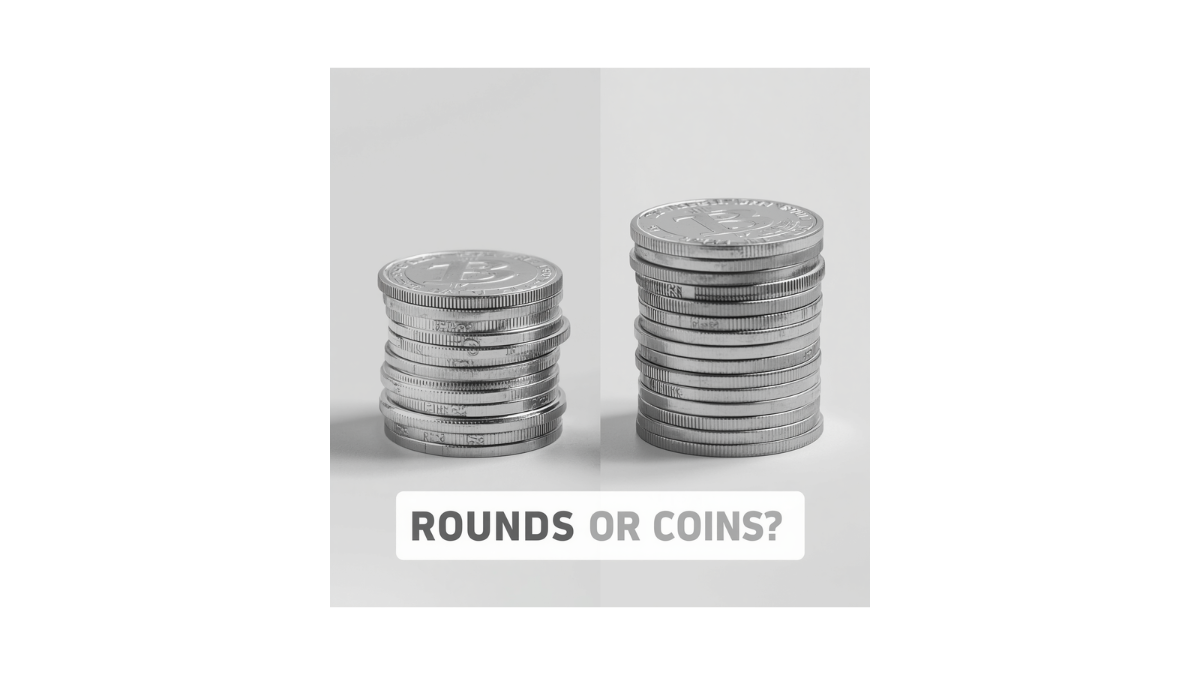
Important: This article is for educational purposes only and is not financial advice. Physical silver prices, premiums, taxes, dealer pricing, and resale demand can change. Always compare total delivered cost, dealer reputation, storage needs, and resale options before buying.
What Is the Difference Between Silver Rounds and Silver Coins?
The main difference is who makes them and what status they carry.
Silver coins are usually minted by government mints. They may carry a legal tender face value, even though their real market value usually comes from silver content, demand, and premiums.
Silver rounds are usually privately minted bullion pieces. They often look like coins, but they are not official government currency. Their value mainly comes from silver content, mint reputation, condition, and market demand.
Government-Minted Bullion
Silver coins are usually issued by government mints. Popular examples include American Silver Eagles, Canadian Silver Maple Leafs, and British Silver Britannias.
Private-Mint Bullion
Silver rounds are usually produced by private mints. They may contain the same amount of silver as coins, but they do not have legal tender status.
Silver Rounds vs Silver Coins: Beginner Comparison Table
| Feature | Silver Coins | Silver Rounds |
|---|---|---|
| Typical issuer | Government mints | Private mints |
| Legal tender status | Often yes, with a small face value | No |
| Silver content | Commonly 1 troy ounce for bullion coins | Commonly 1 troy ounce, though sizes vary |
| Premiums | Often higher | Often lower |
| Recognition | Usually stronger for popular government coins | Depends on private mint reputation and design |
| Resale flexibility | Usually strong, especially for popular coins | Good for recognized rounds, but may require more buyer confidence |
| Best for | Beginners who want trust, recognition, and easy comparison | Stackers who want lower premiums and more silver per dollar |
| Main downside | Higher cost above spot price | Less recognized than major government coins |
What Are Silver Coins?
Silver coins are bullion products issued by official government mints. They often have a face value stamped on them, but that face value is usually much lower than the silver value.
For example, a silver bullion coin may have a small legal tender amount printed on it, but buyers do not usually value it based on that number. They value it based on silver content, market demand, condition, and premium.
American Silver Eagle
A well-known U.S. silver bullion coin that is widely recognized by silver buyers and dealers.
Canadian Silver Maple Leaf
A popular Canadian bullion coin known for broad recognition among silver investors.
British Silver Britannia
A recognized silver bullion coin from The Royal Mint and a common option for global silver buyers.
Pros and Cons of Silver Coins
Pros of Silver Coins
- Often easier for beginners to recognize.
- Usually stronger resale confidence for popular coins.
- Issued by government mints.
- Easy to compare across major dealers.
- Good for small, flexible silver purchases.
Cons of Silver Coins
- Often carry higher premiums than rounds.
- Can become expensive during periods of high demand.
- Some coins may carry collectible premiums beginners do not fully understand.
- May not be the cheapest way to build total silver weight.
One more beginner detail to understand is that some silver coins are bought mainly as bullion, while others are bought as collectibles. If you are unsure where that line is, our guide on bullion vs collectible silver coins explains the difference in simple terms.
What Are Silver Rounds?
Silver rounds are privately minted silver pieces that look similar to coins but are not legal tender. They are typically made for bullion buyers who want silver content without paying the higher premium that often comes with popular government coins.
Many silver rounds contain one troy ounce of silver and are marked with their weight and purity. Some rounds feature simple designs, while others use historical, patriotic, artistic, or collectible themes.
Beginner note: A silver round can still be real silver. The key difference is that it is usually made by a private mint instead of a government mint.
Pros and Cons of Silver Rounds
Pros of Silver Rounds
- Often lower premiums than government coins.
- Good for building silver weight affordably.
- Usually easy to stack, store, and organize.
- Many designs are available.
- Can be a practical middle ground between coins and bars.
Cons of Silver Rounds
- Not legal tender.
- May be less recognizable than major government coins.
- Resale value can depend more heavily on private mint reputation.
- Unusual designs may be harder for beginners to compare.
Are Silver Rounds Cheaper Than Silver Coins?
Silver rounds are often cheaper than silver coins because they usually carry lower premiums. Since rounds are privately minted and do not have the same government-issued status, they can sometimes be a more affordable way to buy silver by the ounce.
Simple Premium Example
Imagine silver spot price is $30 per ounce.
A popular government silver coin might sell for $36 because it has a $6 premium. A private-mint silver round might sell for $32 or $33 because it has a lower premium. In this example, the round gives you more silver exposure for less money, while the coin gives you stronger recognition.
That does not mean rounds are always better. It means rounds can be useful when your main goal is to build silver weight at a lower average cost.
Which Is Easier to Sell: Silver Coins or Silver Rounds?
Popular silver coins are usually easier for beginners to resell because many buyers already know what they are. A widely recognized coin can be easier to verify, price, and compare.
Silver rounds can also be sold, especially if they come from a recognized private mint. However, a buyer may look more closely at the round’s brand, design, weight, purity, and condition before paying a strong price.
Silver Coins
Government bullion coins often win when the buyer wants maximum trust, simple comparison, and easier resale confidence.
Silver Rounds
Rounds often win when the buyer wants lower premiums and does not mind relying more on private mint reputation.
Are Silver Rounds Good for Beginners?
Yes, silver rounds can be good for beginners when they are purchased from reputable dealers and recognized private mints. They can be a smart way to build a silver stack without paying the higher premiums often attached to popular government coins.
The key is to keep it simple. Beginners should avoid confusing collectible rounds, unusual novelty pieces, or silver products that are difficult to verify. Start with clear 1 oz rounds from reputable sources.
Beginner Rule: Do Not Buy Mystery Silver
If you do not understand what the product is, who made it, what purity it has, or how easily you could sell it later, slow down. Cheap silver is not always a good deal if it creates confusion at resale.
Silver Rounds vs Silver Coins vs Silver Bars
Silver rounds sit in the middle between coins and bars. Coins are often the most recognizable. Bars are often efficient for larger silver purchases. Rounds can offer 1 oz flexibility at a lower premium than many government coins.
| Product Type | Best For | Main Strength | Main Tradeoff |
|---|---|---|---|
| Silver Coins | Beginners who want recognition | Strong trust and resale confidence | Often higher premiums |
| Silver Rounds | Buyers who want 1 oz flexibility at lower premiums | Affordable stacking and simple ounce-building | Less recognized than government coins |
| Silver Bars | Buyers building larger silver positions | Often lower cost per ounce, especially in larger sizes | Less flexible if you only own large bars |
For a deeper breakdown, read: Silver Coins vs Silver Bars: Which Is Better for Beginners in 2026?
When Silver Coins Make More Sense
Silver coins may be the better choice if you are buying your first few ounces and want the most beginner-friendly experience. They are often easier to understand and compare because popular bullion coins are widely recognized.
You Want Easy Recognition
Popular coins are familiar to many dealers and silver buyers, which can make them easier to price and resell.
You Are New to Silver
If you are still learning, government-issued bullion coins can feel simpler than sorting through many private-mint designs.
You May Sell Later
If resale confidence matters more than getting the lowest premium, coins may be the more comfortable beginner choice.
When Silver Rounds Make More Sense
Silver rounds may be the better choice if your goal is to stack more silver at a lower cost per ounce. They can be especially useful once you understand premiums and know which dealers and private mints you trust.
You Want Lower Premiums
Rounds are often cheaper above spot than popular government coins, making them attractive for ounce-focused buyers.
You Like 1 oz Flexibility
Rounds offer small-unit flexibility similar to coins, without always carrying the same premium level.
You Are Building Weight
If your goal is total silver ounces, rounds can help lower your average cost compared with buying only high-premium coins.
Beginner Buying Strategy: Use Both Coins and Rounds
Many beginners do not need to choose only one. A balanced beginner silver stack can include both coins and rounds.
Simple Beginner Stack Example
A beginner who wants to build a 40 oz silver stack might buy:
- 10 oz in popular government silver coins for recognition and resale confidence.
- 20 oz in lower-premium silver rounds for affordable stacking.
- 10 oz in a silver bar for lower average cost per ounce.
This gives the buyer a mix of trust, flexibility, and cost efficiency without relying too heavily on one product type.
Common Mistakes Beginners Should Avoid
Confusing Rounds with Coins
Rounds may look like coins, but they are usually not legal tender and are not issued by government mints.
Only Chasing the Lowest Price
A low premium is nice, but reputation, authenticity, dealer trust, and resale demand still matter.
Buying Unknown Designs
Unusual rounds may be real silver, but they can be harder for beginners to price or resell with confidence.
Ignoring Dealer Reputation
Buy from reputable silver dealers with clear pricing, product details, and transparent shipping terms.
Forgetting Storage
Silver is physical. Before your stack grows, have a safe plan for storage, documentation, and privacy.
Paying Collectible Premiums Too Early
Beginners focused on bullion should be careful with limited editions, novelty rounds, and collector-marketed products.
Where Should Beginners Buy Silver Rounds or Coins?
Beginners should buy from reputable dealers that clearly show product type, weight, purity, premium, shipping cost, and return policy. The final delivered price matters more than the advertised price alone.
Before buying, compare more than one dealer. Look at the product premium, shipping fees, payment method fees, buyback policies, and customer reputation.
Helpful next reads:
- Best Silver Dealers 2026
- APMEX vs JM Bullion: Silver Dealer Comparison 2026
- How to Store Silver Safely in 2026
- Silver IRA vs Physical Silver
Are Silver Rounds Good for a Silver IRA?
Some bullion products may qualify for retirement-account storage, but not every round, coin, or bar is automatically eligible. Silver IRA metals generally need to meet specific purity and custodian requirements.
If you are considering silver inside a retirement account, do not assume a product is eligible just because it contains silver. Confirm eligibility with the IRA provider, custodian, or qualified professional before buying.
For a deeper comparison, read: Silver IRA vs Physical Silver.
Final Verdict: Silver Rounds or Silver Coins?
For most beginners, silver coins are the easier first choice because they are recognizable, government-issued, and usually simple to resell.
Silver rounds can also be a smart choice, especially if your goal is to build more silver ounces at a lower premium. They are not inferior just because they are privately minted, but they do require a little more attention to mint reputation and resale demand.
Best beginner answer: Start with a few recognizable silver coins for confidence, then add lower-premium silver rounds once you understand pricing, dealers, storage, and resale basics. A balanced stack can give you both recognition and cost efficiency.
Silver Rounds vs Silver Coins FAQs
Are silver rounds the same as silver coins?
No. Silver coins are usually issued by government mints and may carry legal tender status. Silver rounds are usually privately minted bullion pieces and are not legal tender.
Are silver rounds worth buying?
Silver rounds can be worth buying for people who want lower premiums and more silver for the money. Beginners should focus on rounds from reputable dealers and recognized private mints.
Are silver coins better than silver rounds?
Silver coins may be better for beginners who want recognition and resale confidence. Silver rounds may be better for buyers who want lower premiums and affordable stacking.
Are silver rounds harder to sell?
Recognized silver rounds can usually be sold, but popular government coins may be easier for beginners to resell because they are more widely recognized.
Why are silver rounds cheaper than coins?
Silver rounds often have lower premiums because they are privately minted and do not carry the same government-issued status or collector demand as popular bullion coins.
Should beginners buy silver rounds, coins, or bars?
Many beginners can use a mix. Coins offer recognition, rounds offer lower premiums, and bars can help build weight efficiently as the stack grows.
Do silver rounds have legal tender value?
No. Silver rounds are generally not legal tender. Their value comes mainly from silver content, purity, private mint reputation, condition, and market demand.